

Author

admin

Browsing

The S&P 500 ($SPX) just logged its fifth straight trading box breakout, which means that, of the five trading ranges the index has experienced since the April lows, all have been resolved to the upside.

How much longer can this last? That’s been the biggest question since the massive April 9 rally. Instead of assuming the market is due to roll over, it’s been more productive to track price action and watch for potential changes along the way. So far, drawdowns have been minimal, and breakouts keep occurring. Nothing in the price action hints at a lasting change — yet.

While some are calling this rally “historic,” we have a recent precedent. Recall that from late 2023 through early 2024, the index had a strong start and gave way to a consistent, steady trend.

From late October 2023 through March 2024, the S&P 500 logged seven consecutive trading box breakouts. That streak finally paused with a pullback from late March to early April, which, as we now know, was only a temporary hiccup. Once the bid returned, the S&P 500 went right back to carving new boxes and climbing higher.

New 52-Week Highs Finally Picking Up

If there’s been one gripe about this rally, it’s that the number of new highs within the index has lagged. As we’ve discussed before, among all the internal breadth indicators available, new highs almost always lag — that’s normal. What we really want to see is whether the number of new highs begins to exceed prior peaks as the market continues to rise, which it has, as shown by the blue line in the chart below.

As of Wednesday’s close, 100 S&P 500 stocks were either at new 52-week highs or within 3% of them. That’s a strong base. We expect this number to continue rising as the market climbs, especially if positive earnings reactions persist across sectors.

Even when we get that first day with 100+ S&P 500 stocks making new 52-week highs, though, it might not be the best time to initiate new longs.

The above chart shows that much needs to align for that many stocks to peak in unison, which has historically led to at least a short-term consolidation, if not deeper pullbacks — as highlighted in yellow. Every time is different, of course, but this is something to keep an eye on in the coming weeks.

Trend Check: GoNoGo Still “Go”

The GoNoGo Trend remains in bullish mode, with the recent countertrend signals having yet to trigger a greater pullback.

Active Bullish Patterns

We still have two live bullish upside targets of 6,555 and 6,745, which could be with us for a while going forward. For the S&P 500 to get there, it will need to form new, smaller versions of the trading boxes.

Failed Bearish Patterns

In the chart below, you can view a rising wedge pattern on the recent price action, the third since April. The prior two wedges broke down briefly and did not lead to a major downturn. The largest pullbacks in each case occurred after the S&P 500 dipped below the lower trendline of the pattern.

The deepest drawdown so far is 3.5%, which is not exactly a game-changer. Without downside follow-through, a classic bearish pattern simply can’t be formed, let alone be broken down from.

We’ll continue to monitor these formations as they develop because, at some point, that will change.

Questcorp Mining Inc. (CSE: QQQ,OTC:QQCMF) (OTCQB: QQCMF) (FSE: D910) (the ‘Company’ or ‘Questcorp’) is pleased to announce that Sorbie Bornholm LP (‘Sorbie’), a UK Investment Fund, has undertaken an initial investment in Questcorp Mining Inc. (CSE: QQQ,OTC:QQCMF) (OTCQB: QQCMF) (FSE: D910) (‘Questcorp’ or the ‘Company’). The gross amount of the investment is CAD$2,000,000. The funds will go toward advancing Questcorp’s ongoing exploration and development programs at its flagship La Union Gold and Silver Project in Sonora, Mexico, and its North Island Copper Property on Vancouver Island, British Columbia, and for general working capital purposes.

Reflecting on the new partnership, President & CEO, Saf Dhillon, commented:

‘We are incredibly pleased to have secured this strategic investment from Sorbie Bornholm, a respected international institutional investor. This financing provides us with the flexibility to accelerate exploration across our key assets in Mexico and British Columbia. We view Sorbie’s participation as a strong vote of confidence in Questcorp’s team, vision, and long-term potential to deliver value through discovery and development.’

Whitney Kofford, Managing Director of Sorbie Bornholm LP, added:

‘We are delighted to welcome Questcorp Mining Inc. as a new partner and portfolio company. Our decision to invest reflects our enormous confidence in Questcorp’s leadership. And in turn, by entering into a Sharing Agreement, Questcorp’s leadership signals strong conviction in their ability to execute and grow value for all stakeholders. Sorbie’s Sharing Agreement is designed to align interests towards growth and provide companies with consistent capital that rewards operational success and share price appreciation. We trust Questcorp will use the capital support to systematically unlock long-term value for all shareholders, and we look forward to sharing in their great upside potential.’

About Sorbie Bornholm

Sorbie Bornholm LP is a global investment firm that provides funding for ongoing business objectives to listed micro, small and mid-cap growth companies. We focus on public equity investments in companies that are looking to expand and on management teams with a clear growth strategy. Our extensive experience allows us to invest in most industries in order to provide supportive, longer-term capital that rewards company growth.

Since 2000, Sorbie Bornholm LP founder Greg Kofford has perfected the ‘Sorbie-Strategy’, utilizing a sharing agreement that supports management and rewards growth. This unique approach has now been used in over 50 investments – with many of those resulting in the companies receiving more cash than the original offering proceeds – without having to issue any additional shares.

Sorbie Bornholm’s core values drive who we are and how we invest. We are committed to developing long-term relationships with select listed public companies and their brokers & advisers. We focus on providing supportive, longer-term capital that rewards growth. We invest to make a difference, to become a valued partner and to be a shareholder of choice. It’s important to us that we succeed together.

To see if the Sorbie-Strategy is right for your company, please contact Sorbie Bornholm:

Whitney Kofford, Managing Director
+1-801-554-5889
whitney@sorbiebornholm.com https://sorbiebornholm.co.uk/

About Questcorp Mining Inc.

Questcorp Mining Inc. is engaged in the business of the acquisition and exploration of mineral properties in North America, with the objective of locating and developing economic precious and base metals properties of merit. The Company holds an option to acquire an undivided 100% interest in and to mineral claims totaling 1,168.09 hectares comprising the North Island Copper Property, on Vancouver Island, British Columbia, subject to a royalty obligation. The Company also holds an option to acquire an undivided 100% interest in and to mineral claims totaling 2,520.2 hectares comprising the La Union Project located in Sonora, Mexico, subject to a royalty obligation.

Contact Information

Questcorp Mining Corp.

Saf Dhillon, President & CEO

Email: saf@questcorpmining.ca
Telephone: (604) 484-3031

This news release includes certain ‘forward-looking statements’ under applicable Canadian securities legislation. Forward-looking statements include, but are not limited to, statements with respect to the intended use of proceeds from the Offering. Forward-looking statements are necessarily based upon a number of estimates and assumptions that, while considered reasonable, are subject to known and unknown risks, uncertainties, and other factors which may cause the actual results and future events to differ materially from those expressed or implied by such forward-looking statements. Such factors include, but are not limited to: the ability of Riverside to secure geophysical contractors to undertake orientation surveys and follow up detailed survey to confirm and enhance the drill targets as contemplated or at all, general business, economic, competitive, political and social uncertainties, uncertain capital markets; and delay or failure to receive board or regulatory approvals. There can be no assurance that the geophysical surveys will be completed as contemplated or at all and that such statements will prove to be accurate, as actual results and future events could differ materially from those anticipated in such statements. Accordingly, readers should not place undue reliance on forward-looking statements. The Company disclaims any intention or obligation to update or revise any forward-looking statements, whether as a result of new information, future events or otherwise, except as required by law.

To view the source version of this press release, please visit https://www.newsfilecorp.com/release/273793

News Provided by Newsfile via QuoteMedia

This post appeared first on investingnews.com

Oil Prices Rebound After Trump’s Criticism of Fed Chair Powell

On April 22, 2025, oil prices rebound experienced a modest rebound following a significant drop the previous day. The initial decline was triggered by President Donald Trump’s renewed criticism of Federal Reserve Chair Jerome Powell, which unsettled financial markets and raised concerns about the central bank’s independence.

Market Reaction to Political Commentary

President Trump’s comments on Monday intensified investor fears regarding the Federal Reserve’s autonomy in setting monetary policy. The criticism led to a broad sell-off in equities and commodities, with oil prices bearing the brunt of the market’s anxiety.

Short-Covering Leads to Price Recovery

Despite the initial plunge, oil prices rebound edged higher on Tuesday as investors engaged in short-covering. Brent crude futures rose 0.5% to $66.62 per barrel, while West Texas Intermediate (WTI) crude for May delivery increased by 1% to $63.73 per barrel. The more actively traded WTI June contract also gained 0.7% to $62.84 per barrel.

Ongoing Economic Concerns

Market participants remain cautious amid ongoing fears of a potential recession linked to U.S. tariff policies and concerns over Federal Reserve independence. These factors have increased worries about the U.S. economy and crude demand. Additionally, progress in U.S.-Iran nuclear deal talks has eased supply concerns, potentially impacting oil prices further.

As the situation evolves, investors will closely monitor geopolitical developments and central bank communications to assess the potential long-term impacts on the energy markets.

Source: BloomBurg

The post Oil Prices Rebound After Trump’s Criticism of Powell appeared first on FinanceBrokerage.

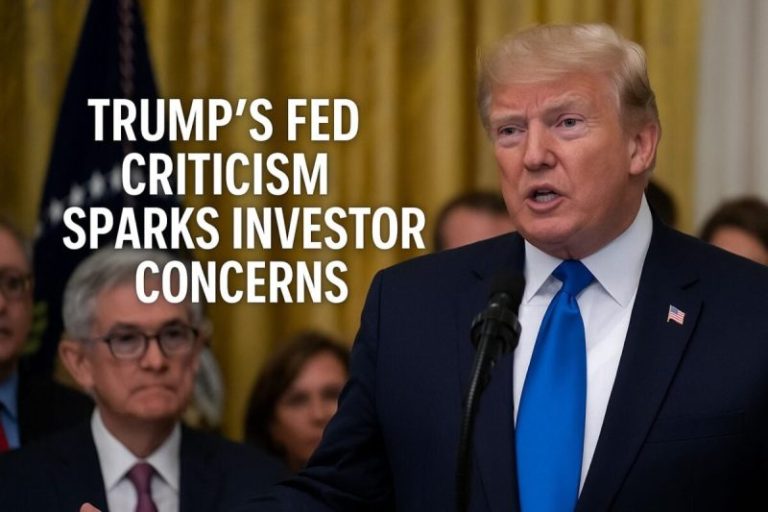
Trump’s Fed Criticism Sparks Investor Concerns

The recent spotlight on Trump’s Fed Criticism has sparked unease among investors and financial analysts alike. President Donald Trump’s repeated public attacks on Federal Reserve Chair Jerome Powell have amplified concerns over the central bank’s independence. As a result, markets have reacted with volatility, and investor sentiment has taken a noticeable hit.

Market Reactions to Political Pressure

Wall Street’s response to Trump’s Fed Criticism was swift. Major stock indices, including the S&P 500 and Nasdaq, posted losses amid uncertainty over future monetary policy decisions. Investors fear that political attempts to sway the Federal Reserve’s agenda may undermine its objectivity. If monetary policy is dictated by short-term political goals rather than long-term economic data, the implications could be severe for inflation, interest rates, and overall economic health.

Why Federal Reserve Independence Matters

One of the cornerstones of a stable economy is a politically neutral central bank. Trump’s Fed Criticism has called that neutrality into question. The Federal Reserve must be able to act without external pressure to maintain credibility in the eyes of global markets. Political interference could compromise its ability to control inflation or manage unemployment rates effectively.

Investor Sentiment and Future Outlook

Investor confidence remains fragile. Many market participants have shifted assets into safer investments such as gold and U.S. treasuries, seeking shelter from potential turmoil. Economic advisors stress the importance of maintaining clear, data-driven policy guidance, especially as the U.S. navigates ongoing trade issues and inflation concerns.

In the coming weeks, the Federal Reserve’s actions will be closely watched. Should Trump’s Fed Criticism intensify, it could further erode market stability and investor trust in U.S. monetary policy.

Source: Yahoo Finance


The post Trump’s Fed Criticism Sparks Investor Concerns appeared first on FinanceBrokerage.

U.S.-based companies announced more than 153,000 job cuts in October, the research firm Challenger, Gray & Christmas reported Thursday.

“This is the highest total for October in over 20 years, and the highest total for a single month in the fourth quarter since 2008,’ the firm said in a news release.

From January through the end of October, employers have announced the elimination of nearly 1.1 million jobs. It’s the most Challenger has recorded since 2020, when the Covid-19 pandemic shut down the global economy.

“October’s pace of job cutting was much higher than average for the month,’ Andy Challenger, the firm’s chief revenue officer, said in a statement. The last time there was a higher October monthly total was in 2003.

“Some industries are correcting after the hiring boom of the pandemic, but this comes as AI adoption, softening consumer and corporate spending, and rising costs drive belt-tightening and hiring freezes,” he said.

On Wednesday, the private payroll processor ADP released its own October jobs data, showing that employers added just 42,000 jobs in the month.

The ADP report also flagged job losses in the leisure and hospitality sector as a potential sign of trouble ahead, given the industry’s acute sensitivity to consumer sentiment.

ADP’s chief economist called the losses in hospitality and leisure a ‘concerning trend.’

Both Challenger and ADP’s reports landed as major companies such as Amazon, IBM, UPS, Target, Microsoft, Paramount and General Motors announced plans to eliminate tens of thousands of jobs.

Despite the wave of downbeat economic news, the Trump administration continues to deliver an upbeat take on the current environment.

“Jobs are booming” and “inflation is falling,” Treasury Secretary Scott Bessent said Tuesday.

However, the most recent available data paints a different picture.

Inflation has also been on the rise. Prices as measured by the Consumer Price Index overall have risen every month since April.

A spokesperson for the Treasury Department did not immediately reply to a request for comment on the Challenger report.

Challenger’s report does not typically carry the same weight with economists and investors as federal jobs data, owing to its methodology.

To arrive at its figures, the firm compiles the number of job cuts companies have publicly announced. But employers may not ultimately carry out all the cuts they roll out.

Moreover, some of the job cuts that multinational companies announce could affect workers outside of the United States. Other headcount reductions could be achieved through attrition, rather than layoffs. The report also may not capture smaller layoffs over the long run.

But in the midst of a federal data blackout caused by the government shutdown, Challenger’s latest report is being read more closely than usual.

The federal government’s October jobs report that would traditionally be released Friday will not be published this week, due to the shutdown.

Other key data about the U.S. economy like GDP and an inflation indicator called PCE, closely watched by the Federal Reserve, has also been delayed.

Challenger equated the impact of AI on the current labor market to the rise of the internet in the early aughts. “Like in 2003, a disruptive technology is changing the landscape,” it said.

‘Technology continues to lead in private-sector job cuts as companies restructure amid AI integration, slower demand, and efficiency pressures,’ Challenger said.

But even firms that are not actively cutting jobs have warned that they do not plan to add to their headcount in the near term, with several pointing directly to AI’s impact on their personnel needs.

On Wednesday night, JPMorgan Chase CEO Jamie Dimon told CNN that headcount at his company would likely remain steady as the nation’s largest bank rolls out AI internally.

Goldman Sachs CEO David Solomon also recently told his employees that the firm would ‘constrain headcount growth through the end of the year,’ as it takes advantage of AI efficiencies, Bloomberg reported.

This post appeared first on NBC NEWS

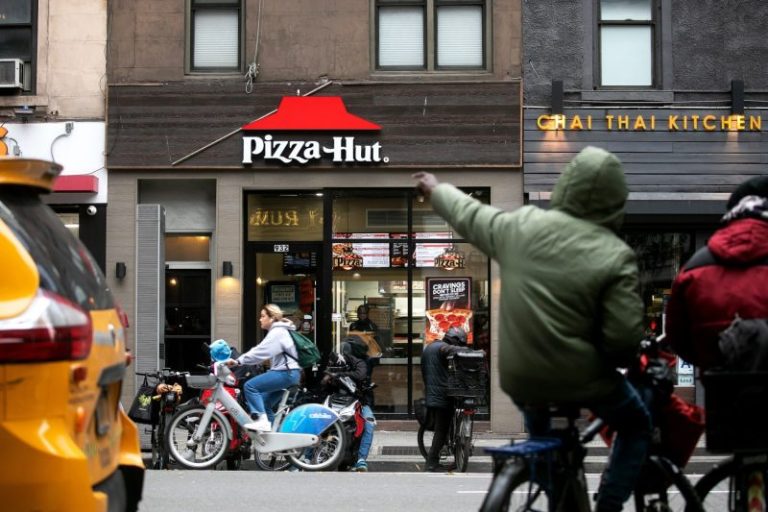
Yum Brands said on Tuesday it was exploring strategic options for its Pizza Hut chain as the unit struggles to keep pace in a highly competitive fast-food industry vying for sales from a stressed consumer.

“Pizza Hut‘s performance indicates the need to take additional action to help the brand realize its full value, which may be better executed outside of Yum Brands,” Yum Brands’ new CEO, Chris Turner, said in a statement.

Pizza Hut‘s sales have lagged Yum Brands’ other prominent units, Taco Bell and KFC International, falling for seven consecutive quarters. In comparison, Taco Bell last reported negative comparable sales in June 2020.

Yum Brands’ shares were up about 2% in premarket trading after the company banked on 7% growth in Taco Bell U.S. same-store sales and 3% growth in KFC International to beat third quarter estimates.

Pizza Hut accounts for about 11% of Yum Brands’ operating profits, compared with about 38% for Taco Bell’s U.S. business.

Several quarters of price hikes at restaurants, sticky inflation and economic uncertainty have forced consumers to become more wary about dining out as they look to stretch their budgets. Still, pizzas are viewed as a value-option to feed families.

Industry giant Domino’s Pizza DPZ.O said in October that although fast-food traffic was slowing, consumers were still seeking out its pizzas, helped by promotions and new menu items, as well as its delivery partnerships with third-party aggregators such as Doordash DASH.O and UberEats UBER.N.

While Pizza Hut has also offered value deals such as various personal pizzas for $5 and $2, “an insufficient value message amid a competitive value landscape resulted in transaction softness,” company veteran and former CEO David Gibbs said in August.

Taco Bell’s Tex-Mex cuisine and its more affordable prices have held Yum Brands in good stead against the slowdown in dining out.

Yum Brands’ worldwide same-store sales grew 3% during the quarter ended September 30, 2025 edging past estimates of a 2.68% increase, according to data compiled by LSEG.

Adjusted profit per share of $1.58 beat estimates of $1.49.

Packaged food giant PepsiCo acquired Pizza Hut in 1977, but spun off the chain along with KFC and Taco Bell in 1997 to create a restaurants company, which took on the name Yum Brands in 2002.

A deadline to complete Pizza Hut‘s strategic review has not been set, and there was no assurance that the process would result in a transaction, Yum Brands said on Friday.

This post appeared first on NBC NEWS

The S&P 500 ($SPX) just logged its fifth straight trading box breakout, which means that, of the five trading ranges the index has experienced since the April lows, all have been resolved to the upside.

How much longer can this last? That’s been the biggest question since the massive April 9 rally. Instead of assuming the market is due to roll over, it’s been more productive to track price action and watch for potential changes along the way. So far, drawdowns have been minimal, and breakouts keep occurring. Nothing in the price action hints at a lasting change — yet.

While some are calling this rally “historic,” we have a recent precedent. Recall that from late 2023 through early 2024, the index had a strong start and gave way to a consistent, steady trend.

From late October 2023 through March 2024, the S&P 500 logged seven consecutive trading box breakouts. That streak finally paused with a pullback from late March to early April, which, as we now know, was only a temporary hiccup. Once the bid returned, the S&P 500 went right back to carving new boxes and climbing higher.

New 52-Week Highs Finally Picking Up

If there’s been one gripe about this rally, it’s that the number of new highs within the index has lagged. As we’ve discussed before, among all the internal breadth indicators available, new highs almost always lag — that’s normal. What we really want to see is whether the number of new highs begins to exceed prior peaks as the market continues to rise, which it has, as shown by the blue line in the chart below.

As of Wednesday’s close, 100 S&P 500 stocks were either at new 52-week highs or within 3% of them. That’s a strong base. We expect this number to continue rising as the market climbs, especially if positive earnings reactions persist across sectors.

Even when we get that first day with 100+ S&P 500 stocks making new 52-week highs, though, it might not be the best time to initiate new longs.

The above chart shows that much needs to align for that many stocks to peak in unison, which has historically led to at least a short-term consolidation, if not deeper pullbacks — as highlighted in yellow. Every time is different, of course, but this is something to keep an eye on in the coming weeks.

Trend Check: GoNoGo Still “Go”

The GoNoGo Trend remains in bullish mode, with the recent countertrend signals having yet to trigger a greater pullback.

Active Bullish Patterns

We still have two live bullish upside targets of 6,555 and 6,745, which could be with us for a while going forward. For the S&P 500 to get there, it will need to form new, smaller versions of the trading boxes.

Failed Bearish Patterns

In the chart below, you can view a rising wedge pattern on the recent price action, the third since April. The prior two wedges broke down briefly and did not lead to a major downturn. The largest pullbacks in each case occurred after the S&P 500 dipped below the lower trendline of the pattern.

The deepest drawdown so far is 3.5%, which is not exactly a game-changer. Without downside follow-through, a classic bearish pattern simply can’t be formed, let alone be broken down from.

We’ll continue to monitor these formations as they develop because, at some point, that will change.
The S&P 500 ($SPX) just logged its fifth straight trading box breakout, which means that, of the five trading ranges the index has experienced since the April lows, all have been resolved to the upside.

How much longer can this last? That’s been the biggest question since the massive April 9 rally. Instead of assuming the market is due to roll over, it’s been more productive to track price action and watch for potential changes along the way. So far, drawdowns have been minimal, and breakouts keep occurring. Nothing in the price action hints at a lasting change — yet.

While some are calling this rally “historic,” we have a recent precedent. Recall that from late 2023 through early 2024, the index had a strong start and gave way to a consistent, steady trend.

From late October 2023 through March 2024, the S&P 500 logged seven consecutive trading box breakouts. That streak finally paused with a pullback from late March to early April, which, as we now know, was only a temporary hiccup. Once the bid returned, the S&P 500 went right back to carving new boxes and climbing higher.

New 52-Week Highs Finally Picking Up

If there’s been one gripe about this rally, it’s that the number of new highs within the index has lagged. As we’ve discussed before, among all the internal breadth indicators available, new highs almost always lag — that’s normal. What we really want to see is whether the number of new highs begins to exceed prior peaks as the market continues to rise, which it has, as shown by the blue line in the chart below.

As of Wednesday’s close, 100 S&P 500 stocks were either at new 52-week highs or within 3% of them. That’s a strong base. We expect this number to continue rising as the market climbs, especially if positive earnings reactions persist across sectors.

Even when we get that first day with 100+ S&P 500 stocks making new 52-week highs, though, it might not be the best time to initiate new longs.

The above chart shows that much needs to align for that many stocks to peak in unison, which has historically led to at least a short-term consolidation, if not deeper pullbacks — as highlighted in yellow. Every time is different, of course, but this is something to keep an eye on in the coming weeks.

Trend Check: GoNoGo Still “Go”

The GoNoGo Trend remains in bullish mode, with the recent countertrend signals having yet to trigger a greater pullback.

Active Bullish Patterns

We still have two live bullish upside targets of 6,555 and 6,745, which could be with us for a while going forward. For the S&P 500 to get there, it will need to form new, smaller versions of the trading boxes.

Failed Bearish Patterns

In the chart below, you can view a rising wedge pattern on the recent price action, the third since April. The prior two wedges broke down briefly and did not lead to a major downturn. The largest pullbacks in each case occurred after the S&P 500 dipped below the lower trendline of the pattern.

The deepest drawdown so far is 3.5%, which is not exactly a game-changer. Without downside follow-through, a classic bearish pattern simply can’t be formed, let alone be broken down from.

We’ll continue to monitor these formations as they develop because, at some point, that will change.

The S&P 500 ($SPX) just logged its fifth straight trading box breakout, which means that, of the five trading ranges the index has experienced since the April lows, all have been resolved to the upside.

How much longer can this last? That’s been the biggest question since the massive April 9 rally. Instead of assuming the market is due to roll over, it’s been more productive to track price action and watch for potential changes along the way. So far, drawdowns have been minimal, and breakouts keep occurring. Nothing in the price action hints at a lasting change — yet.

While some are calling this rally “historic,” we have a recent precedent. Recall that from late 2023 through early 2024, the index had a strong start and gave way to a consistent, steady trend.

From late October 2023 through March 2024, the S&P 500 logged seven consecutive trading box breakouts. That streak finally paused with a pullback from late March to early April, which, as we now know, was only a temporary hiccup. Once the bid returned, the S&P 500 went right back to carving new boxes and climbing higher.

New 52-Week Highs Finally Picking Up

If there’s been one gripe about this rally, it’s that the number of new highs within the index has lagged. As we’ve discussed before, among all the internal breadth indicators available, new highs almost always lag — that’s normal. What we really want to see is whether the number of new highs begins to exceed prior peaks as the market continues to rise, which it has, as shown by the blue line in the chart below.

As of Wednesday’s close, 100 S&P 500 stocks were either at new 52-week highs or within 3% of them. That’s a strong base. We expect this number to continue rising as the market climbs, especially if positive earnings reactions persist across sectors.

Even when we get that first day with 100+ S&P 500 stocks making new 52-week highs, though, it might not be the best time to initiate new longs.

The above chart shows that much needs to align for that many stocks to peak in unison, which has historically led to at least a short-term consolidation, if not deeper pullbacks — as highlighted in yellow. Every time is different, of course, but this is something to keep an eye on in the coming weeks.

Trend Check: GoNoGo Still “Go”

The GoNoGo Trend remains in bullish mode, with the recent countertrend signals having yet to trigger a greater pullback.

Active Bullish Patterns

We still have two live bullish upside targets of 6,555 and 6,745, which could be with us for a while going forward. For the S&P 500 to get there, it will need to form new, smaller versions of the trading boxes.

Failed Bearish Patterns

In the chart below, you can view a rising wedge pattern on the recent price action, the third since April. The prior two wedges broke down briefly and did not lead to a major downturn. The largest pullbacks in each case occurred after the S&P 500 dipped below the lower trendline of the pattern.

The deepest drawdown so far is 3.5%, which is not exactly a game-changer. Without downside follow-through, a classic bearish pattern simply can’t be formed, let alone be broken down from.

We’ll continue to monitor these formations as they develop because, at some point, that will change.
The S&P 500 ($SPX) just logged its fifth straight trading box breakout, which means that, of the five trading ranges the index has experienced since the April lows, all have been resolved to the upside.

How much longer can this last? That’s been the biggest question since the massive April 9 rally. Instead of assuming the market is due to roll over, it’s been more productive to track price action and watch for potential changes along the way. So far, drawdowns have been minimal, and breakouts keep occurring. Nothing in the price action hints at a lasting change — yet.

While some are calling this rally “historic,” we have a recent precedent. Recall that from late 2023 through early 2024, the index had a strong start and gave way to a consistent, steady trend.

From late October 2023 through March 2024, the S&P 500 logged seven consecutive trading box breakouts. That streak finally paused with a pullback from late March to early April, which, as we now know, was only a temporary hiccup. Once the bid returned, the S&P 500 went right back to carving new boxes and climbing higher.

New 52-Week Highs Finally Picking Up

If there’s been one gripe about this rally, it’s that the number of new highs within the index has lagged. As we’ve discussed before, among all the internal breadth indicators available, new highs almost always lag — that’s normal. What we really want to see is whether the number of new highs begins to exceed prior peaks as the market continues to rise, which it has, as shown by the blue line in the chart below.

As of Wednesday’s close, 100 S&P 500 stocks were either at new 52-week highs or within 3% of them. That’s a strong base. We expect this number to continue rising as the market climbs, especially if positive earnings reactions persist across sectors.

Even when we get that first day with 100+ S&P 500 stocks making new 52-week highs, though, it might not be the best time to initiate new longs.

The above chart shows that much needs to align for that many stocks to peak in unison, which has historically led to at least a short-term consolidation, if not deeper pullbacks — as highlighted in yellow. Every time is different, of course, but this is something to keep an eye on in the coming weeks.

Trend Check: GoNoGo Still “Go”

The GoNoGo Trend remains in bullish mode, with the recent countertrend signals having yet to trigger a greater pullback.

Active Bullish Patterns

We still have two live bullish upside targets of 6,555 and 6,745, which could be with us for a while going forward. For the S&P 500 to get there, it will need to form new, smaller versions of the trading boxes.

Failed Bearish Patterns

In the chart below, you can view a rising wedge pattern on the recent price action, the third since April. The prior two wedges broke down briefly and did not lead to a major downturn. The largest pullbacks in each case occurred after the S&P 500 dipped below the lower trendline of the pattern.

The deepest drawdown so far is 3.5%, which is not exactly a game-changer. Without downside follow-through, a classic bearish pattern simply can’t be formed, let alone be broken down from.

We’ll continue to monitor these formations as they develop because, at some point, that will change.